


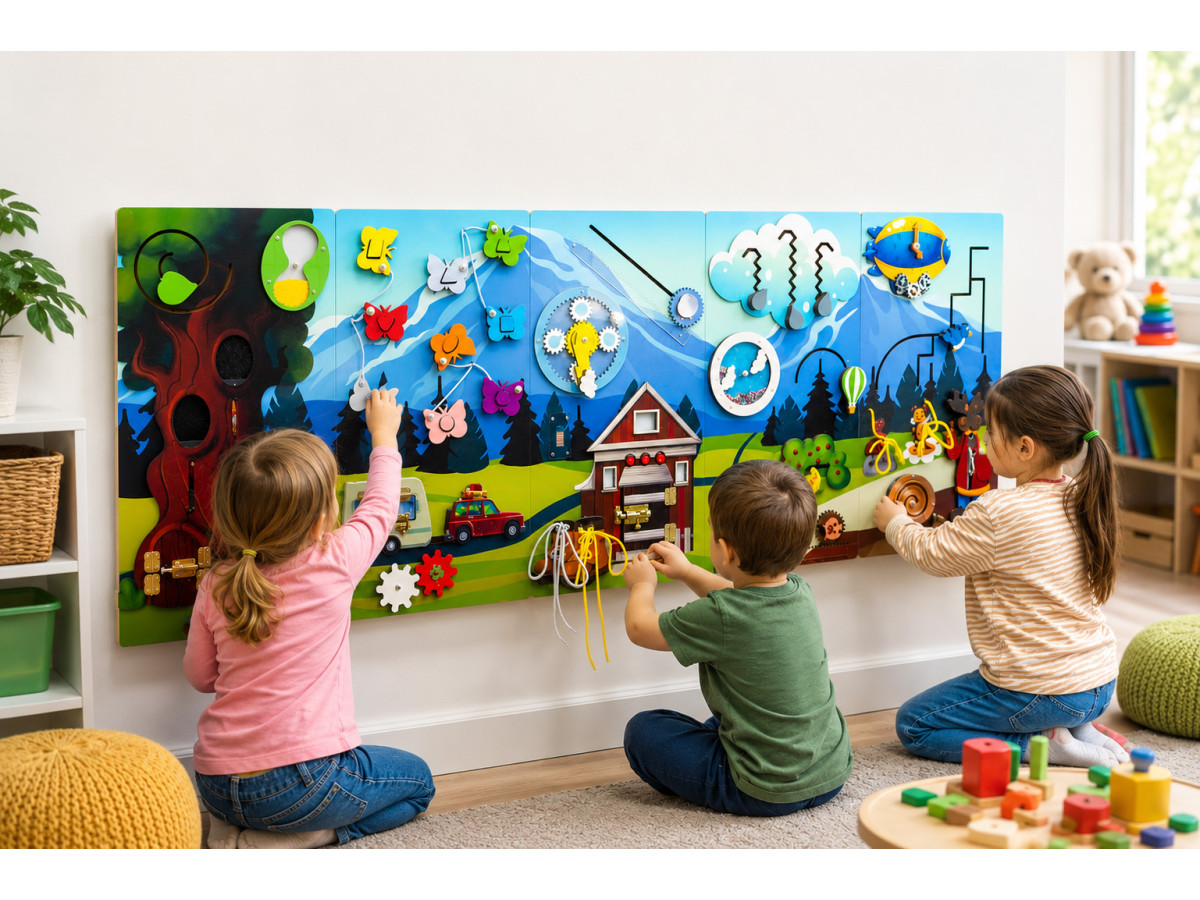
A kids playroom works best when every part of it has a job. Before you buy anything, decide who will use the room and what they will do there. Also decide how much floor and wall space you can give up. This guide explains what a kids playroom should have, from play zones and storage to lighting and a wall activity area. It ends with a checklist for a nursery, a spare room or a corner of the living room.
Start with how the room will be used
Three questions shape every other choice. How old are the children, and will that change in the next two or three years? Is the room only for play, or does it also hold a bed or a desk? Will adults sit in it as well? A room for one toddler needs different furniture than a room shared with a school-age child. This is true even when the floor area is the same.
Write the answers down before you shop. They stop you from buying items that look good online but do not fit how your family plays.
The zones every kids playroom needs
Instead of thinking about individual toys, think about zones. Each zone supports one kind of play, and together they make the room easy to use and easy to tidy.
Open floor for active play
Keep the centre of the room free. Children need space to build, roll out a play mat, push a toy car or set up a pretend game. A soft rug or foam floor tiles make the floor comfortable. Both are easy to move when the room changes. Resist the urge to line every wall with furniture and leave nowhere to play.
A quiet corner
A small reading nook gives children a place to slow down. A floor cushion, a low shelf with a few books at child height and a soft light are enough. In a shared kids playroom, a quiet corner helps when one child wants calm and another wants noise. Our guide to what should be in a sensory room covers calm zones in more detail.
A creative table
Drawing, crafts and puzzles need a table and chairs at the right height. Choose a surface that wipes clean. Keep paper, crayons and craft supplies in open boxes within reach. Children can then start and finish an activity without help.
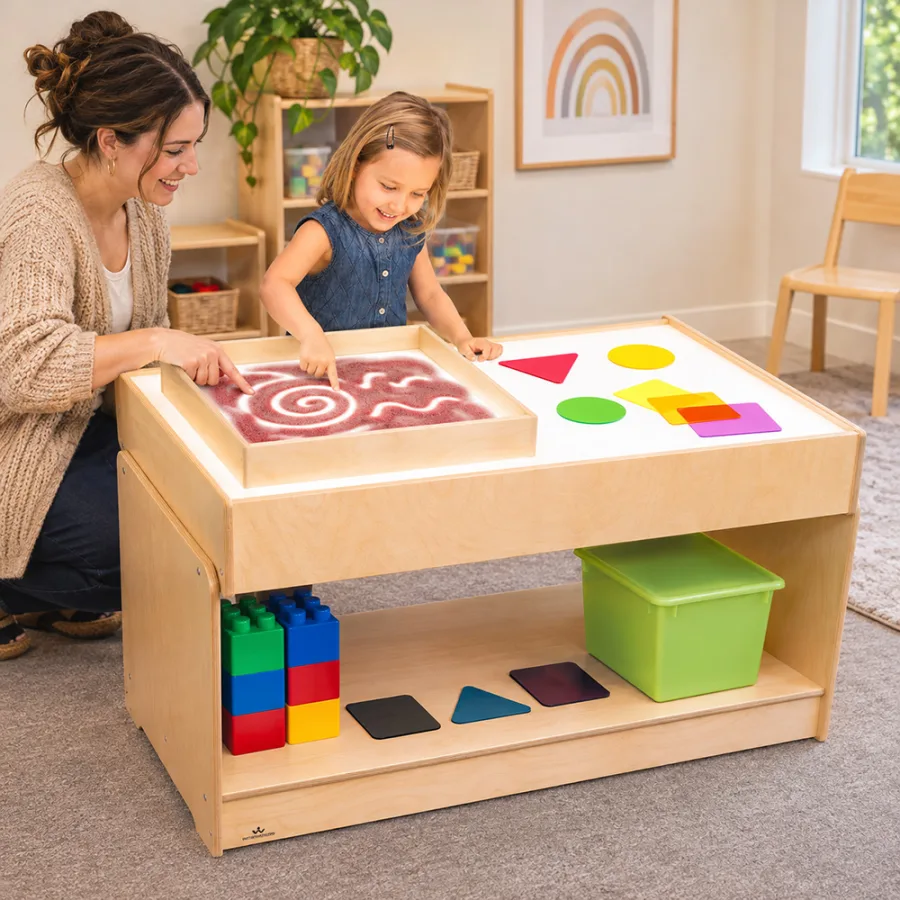
A light table is a good alternative to a plain craft table. Children can trace on the lit top, sort translucent shapes or draw in a shallow tray of sand. Accessories such as shapes and sand trays are sold separately. Browse our light tables for kids to compare sizes.
Storage children can use themselves
Low open shelves and labelled bins let children put things away on their own. Use picture labels for younger children, and keep only a part of the toys out at a time. Rotating toys every few weeks keeps the room tidy and makes familiar items feel new again.
A wall activity zone
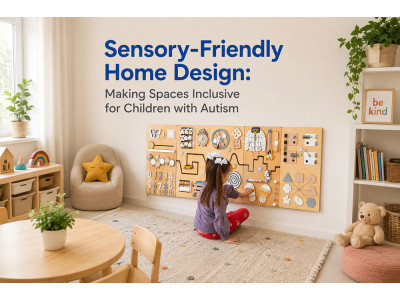
Walls are the most unused space in a typical kids playroom. A wall activity zone gives children something to do at standing height, without taking any floor space. This is where sensory wall panels and busy boards fit, and it is covered in the next section.
Using the wall: sensory wall panels and busy boards
A busy board is a wooden board with locks, latches, gears and sliders. Children can turn, slide and open each part. When several boards are mounted side by side, the result is a sensory wall. Children get hands-on practice with everyday mechanisms. The kids playroom also gets a feature wall that is more interesting than a poster.
Most of our large sets are five-panel sets measuring 175×65 cm (69×26 in), with 35 cm per panel. A family usually starts with one set and adds more later if the room allows. Each panel weighs about 3 kg and sticks out about 4 cm from the wall. We provide installation instructions with every order. We do not install the panels ourselves. Plan to mount them yourself or ask a handyman, and choose fixings that suit your wall type.
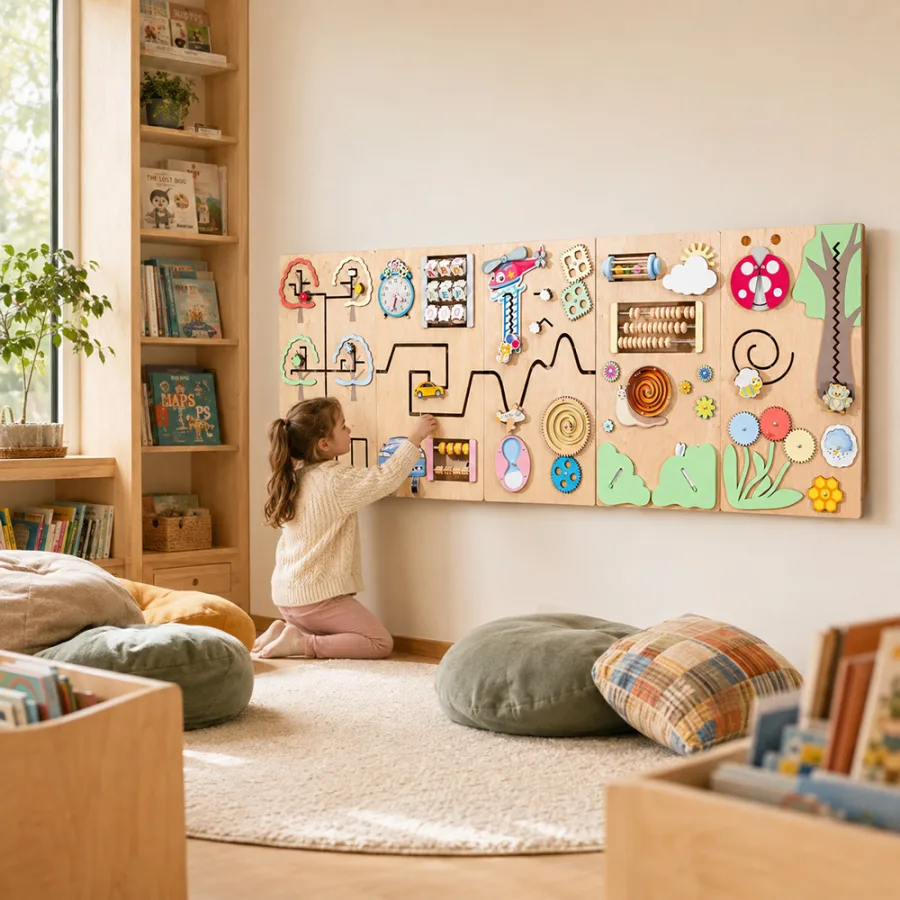
Mount the panels at the child's eye level or a little lower. Every element should be reachable without stretching. For a home playroom, these options are a good place to start:
- Mini busy board for 1 year old for a low corner for a baby.
- Wall busy board for toddlers for one toddler and a single section of wall.
- Large Montessori busy board for two children playing side by side.
- Pastel busy board set for playrooms for a soft, neutral room.
- Mountain themed busy board for a nature look.
- DIY sensory wall kit if you want to compose your own layout from separate panels.
To compare formats and sizes, browse all busy boards or the full range of sensory wall panels. To see how long children stay interested, read our age-by-age guide to busy board play time.
Floor, light and safety basics
Good basics matter more than extra decoration in any kids playroom. Check these before adding anything else:
- Floor. A soft surface in the main play area, and a floor that is easy to wipe.
- Light. Use daylight where you can, plus a warm ceiling light and a softer lamp for the quiet corner.
- Furniture. Choose low, stable pieces with rounded edges, and fix tall furniture to the wall.
- Toys. Follow the age label on every toy, and keep small parts away from children under three.
- Visibility. Arrange the room so an adult can see every zone from the door.
A playroom checklist by age
Use this table as a starting point. Children vary a great deal. Treat the ages as a rough guide and adjust to what your child enjoys.
| Age | Focus of the room | Good to include |
|---|---|---|
| 1 to 3 years | Open floor and simple hands-on play | Soft rug, low shelf, board books, a wall busy board at toddler height |
| 3 to 5 years | Pretend play and early crafts | Child-size table, dress-up box, picture-labelled bins, a themed sensory wall |
| 6 years and up | Projects, games and reading | Desk space, deeper storage, a reading corner, a board for games or schedules |
Unsure which age suits a busy board? Our guide to the best age for a busy board explains it step by step.
Planning a small kids playroom
A small kids playroom can still work well. Go vertical: mount activities and shelves on the wall, so the floor stays open. Choose furniture that does more than one job, such as a bench with storage inside. Use one rug to mark the play area, and keep the rest of the floor clear. In a shared bedroom, mark the play zone with a rug and a low shelf. The bed side then stays calm. For layout ideas that go beyond the playroom, see our sensory room ideas.
Playrooms outside the home
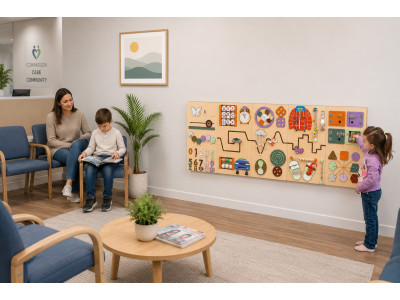
The same zone approach works in shared spaces. A daycare playroom needs clear zones, storage that staff can reach and a calm corner. A waiting area needs something to do at standing height that keeps children occupied without extra equipment on the floor. Wall panels suit both, because they use wall space and not floor space. See our pages for daycare and for clinics and waiting rooms.
Common mistakes to avoid
- Filling the floor with furniture and leaving no open play space.
- Buying for the age your child will be next year only, and not for today.
- Keeping all the toys out at once, which makes tidying hard.
- Choosing a wall decoration the child cannot touch or use.
- Putting storage too high for children to reach.
For ideas on what to put on the wall, from stickers to drawing boards, read our guide to playroom wall decor.
Planning a kids playroom or a play area and not sure which panels fit your wall? Send us the room size and age of the children, and we will suggest a layout. We make fully customizable sensory wall panels and ship them worldwide.
Frequently Asked Questions About a Kids Playroom
What should a kids playroom have?
At a minimum, it needs open floor space with a soft surface, storage that children can reach and a quiet corner. Add a table for crafts and a wall activity area. Lighting should work for both bright play and calm time.
How do I organize a small playroom?
Use the walls. Mount shelves and wall activities so the floor stays open. Choose storage furniture that doubles as seating, and keep only part of the toys out at a time.
At what height should a busy board be mounted?
Mount it at the child's eye level or slightly lower, so every element can be reached without stretching. Follow the installation instructions that come with the panels, and choose fixings that suit your wall.
How many sensory wall panels do I need for a home playroom?
Most families start with one five-panel set, which measures 175×65 cm (69×26 in). If the wall allows, you can add a second set later. Send us your wall measurements and we can suggest a layout.
Can the same playroom work for a toddler and an older child?
Yes, if you divide it into zones. Keep the floor and low shelves for the younger child. Give the older child a table or desk area, and choose wall activities that suit a wide range of ages.

Write a comment