


Sensory play helps every child learn. For many autistic children it does something particular: it offers a hands-on activity with no social script to follow and no single right way to do it. That's a big part of why the question "why is sensory play important for autism" comes up so often among parents, educators and therapists. This guide walks through what sensory boards and busy boards actually offer, how families and classrooms tend to use them, and what to look for when choosing one.
Every autistic child is different. No single toy or activity works the same way for everyone. What follows are common patterns reported by parents, educators and occupational therapists, not guarantees for any individual child.
How Sensory Boards Support Autistic Children
A sensory board gives a child a structured, predictable set of things to do with their hands: switches to flip, latches to open, sliders to move, textures to explore. Unlike a toy built around one activity, a busy board combines several of these in one place. A child can move between them at their own pace, without needing new instructions each time.
That predictability matters. Many autistic children respond well to activities that behave the same way every time. There's no social cue to decode and no rule that changes from one day to the next. That consistency is part of why a board tends to hold attention without pressure.
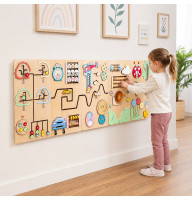
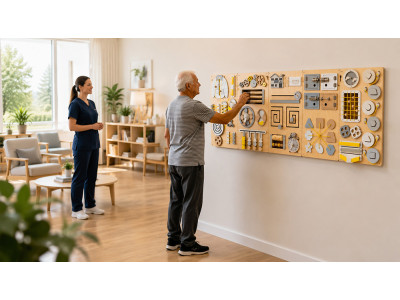
For larger spaces such as therapy clinics, classrooms and waiting rooms, many organizations use sensory wall panels instead. These give more than one child a spot to explore at the same time.
Calming and Regulating Through Touch
Many autistic children find focused, repetitive touch calming. A compact cube-shaped sensory panel is often used for exactly that. It's small and portable, so it travels well for car rides, waiting rooms, or anywhere a familiar activity helps a child settle. Giving a child's hands and attention somewhere specific to go is often more workable than simply asking them to calm down.
Fine Motor Skills Through Repeated Practice
Turning a latch, sliding a lock and flipping a switch all use the small muscles in the hand and fingers. These are the same muscles involved in buttoning a shirt, holding a pencil or using a zipper. Practicing these movements in a low-pressure, game-like setting gives a child repeated reps without it feeling like a drill. Skills built this way on a busy board often carry over to daily routines, since the underlying hand motion is the same one.
Communication and Shared Attention
Using a sensory board together with a parent, sibling or therapist creates a shared point of focus. It doesn't require much verbal back-and-forth. Naming colors, shapes and actions while a child engages with an element - "the blue gear is turning," "that latch is stuck" - builds vocabulary in context rather than through direct drilling. For children who are nonverbal or still developing spoken language, this kind of shared attention around an object is a well-documented building block for later language development. Consistent, everyday use creates more of these moments. How much any individual child progresses, and how fast, varies, and isn't something a single product can promise.
Engaging Multiple Senses
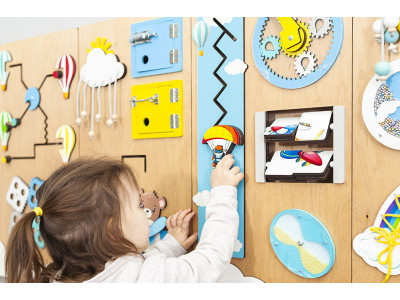
Not every child responds to sensory input the same way. Boards that combine several types of feedback tend to reach more children than one built around a single sense. Some children are drawn to visual movement, like a clock hand turning or a bead sliding along a track. Others respond more to sound, like a small xylophone or the click of a gear catching. Bringing several of these together in one board gives a wider range of children something that clicks for them specifically.

Choosing a Sensory Board or Wall Panel for Autism
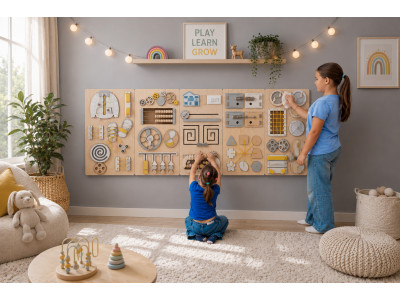
A portable busy board is usually the right starting point at home. It's easy to place anywhere a child spends time, and easy to swap out if a particular element isn't landing. For schools, therapy centers, waiting rooms and larger shared spaces, sensory wall panels make more sense. They mount to the wall, take up no floor space, and let more than one child use different sections at once.
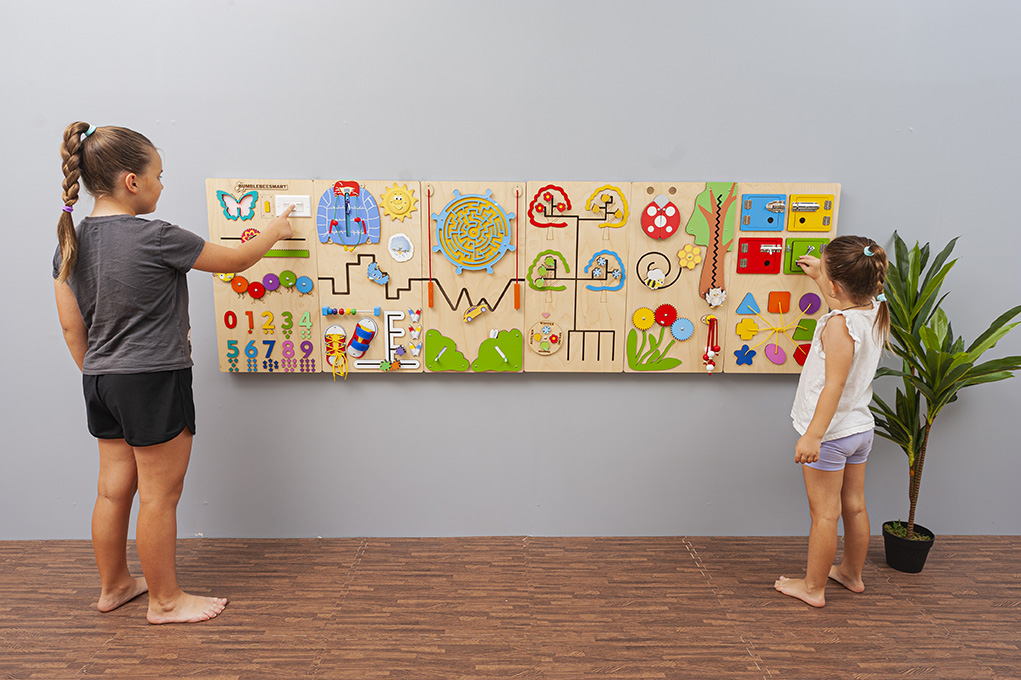
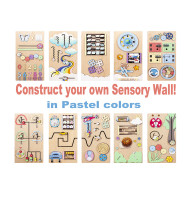
A few things to look for either way: elements that are securely fixed rather than glued, so nothing works loose with repeated use, and non-toxic, water-based finishes. Match the element mix to what actually engages the specific child, rather than a generic "autism" theme. A board can also be built around a child's particular interests: a favorite texture, a favorite color, or a mechanism that resembles something from their daily routine. Our guide to choosing a sensory wall panel covers sizing, mounting height and material choices in more depth. For a fully custom layout, our DIY sensory wall builder lets you pick your own panel count and element mix.
If you're setting up a dedicated space rather than a single board, our guide on what should be in a sensory room for autism walks through the fuller picture. Our sensory-friendly home design guide covers making a whole room or home more comfortable for an autistic child.
What This Does, and Doesn't, Claim to Do
Sensory boards and busy boards are activity and engagement products, not medical devices or therapy tools. They don't diagnose, treat or cure autism. They're not a substitute for occupational therapy, speech therapy or any other professional support a child may need. Structured, predictable sensory activities are a recognized part of occupational therapy practice for many autistic children, and consistent physical environments are widely considered helpful for autistic learners. What a single board offers is one accessible way to put those general principles into daily use, at home, at school or in a waiting room, alongside whatever other support a child already has. For a closer look at the research behind sensory play more broadly, see our guide to the science behind sensory wall panels.
Frequently asked questions
Why is sensory play important for autism specifically?
Sensory play gives a child a predictable, hands-on activity with no social script required and no single right way to do it. Many autistic children respond well to that combination of structure and self-direction. It can be used to practice fine motor skills, build shared attention with a caregiver, or simply settle into a calming, focused activity.
What age is a sensory board appropriate for an autistic child?
There's no single age cutoff. Younger children generally do better with larger, simpler elements. Older children can handle finer mechanisms and more of them at once. Our guide to the best age for a busy board covers this by developmental stage rather than a fixed number.
Should I buy a ready-made board or build a DIY sensory panel?
Either can work well. A ready-made board is quicker to start with, and comes with elements already tested for secure mounting. A DIY approach gives more control over which specific elements go on the board. That matters if a child responds strongly to one particular texture or mechanism. Our DIY sensory wall builder lets you choose your own mix either way.
Can a sensory board replace occupational therapy?
No. A sensory board is an activity and engagement product, not a treatment. It can complement occupational therapy or other professional support by giving a child more everyday opportunities to practice similar hand movements and sensory engagement. It isn't a substitute for individualized therapy from a qualified provider.
Additional Resources for Parents
- Browse busy boards
- Explore sensory wall panels
- Sensory wall panels for autism
- Sensory wall panels for autism: the complete buying guide
- What should be in a sensory room for autism?
- How long do kids play with busy boards?
- What is the best age for a busy board?
Educational guide from the BumbleBeeSmart blog. Sensory boards and sensory wall panels are activity and engagement products, not medical devices, and do not diagnose, treat or cure autism or any other condition. Not medical advice.



Write a comment